It’s day 14 on our tour of the Balkans, and sadly our last full day. For those reading for the first time, welcome! We’ve seen three countries on this trip: Albania, Kosovo and North Macedonia and are currently in the North Macedonian capital – Skopje.
Two days ago, a walking tour showed us most of the main sights in the city, but we’re coming back into the centre today to look at a couple of places in greater detail, which were glossed over before.
Before all of that though, we have some business to attend to. Dad, the eejit that he is, left his hoodie on the bus after few days ago, so we’ve arranged to pick it up from the offices of the tour company. We have the address (1 Macedonia Street), but finding it proves to be a challenge. If only there was some kind of a big yellow flag outside their office to identify it.
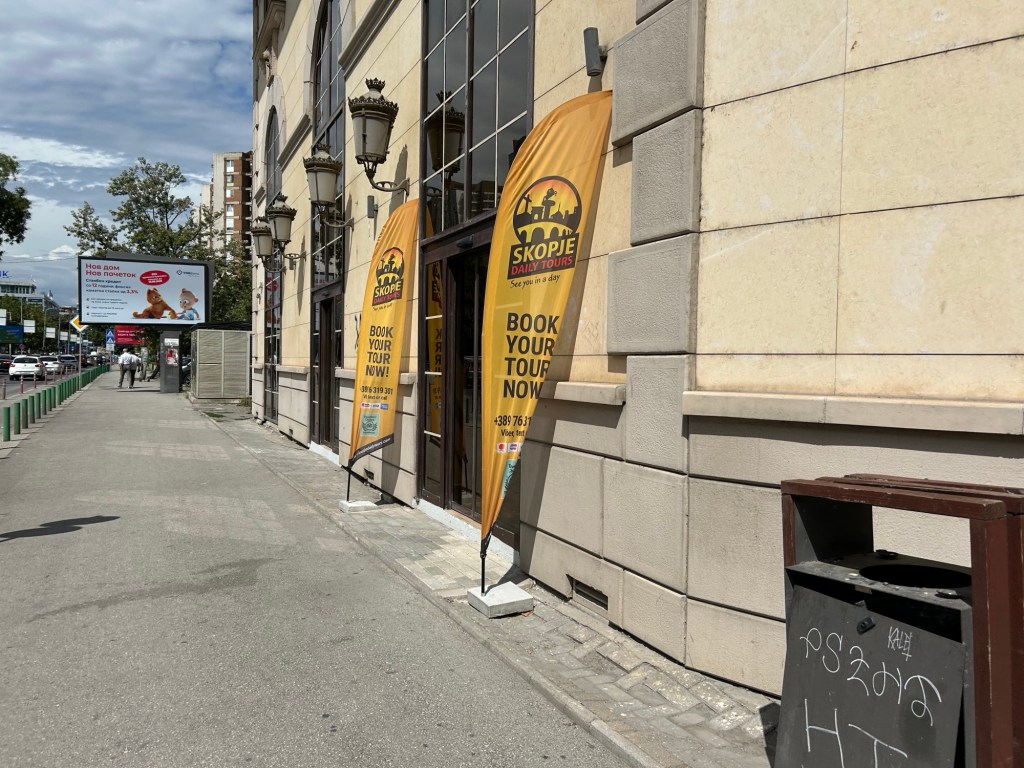
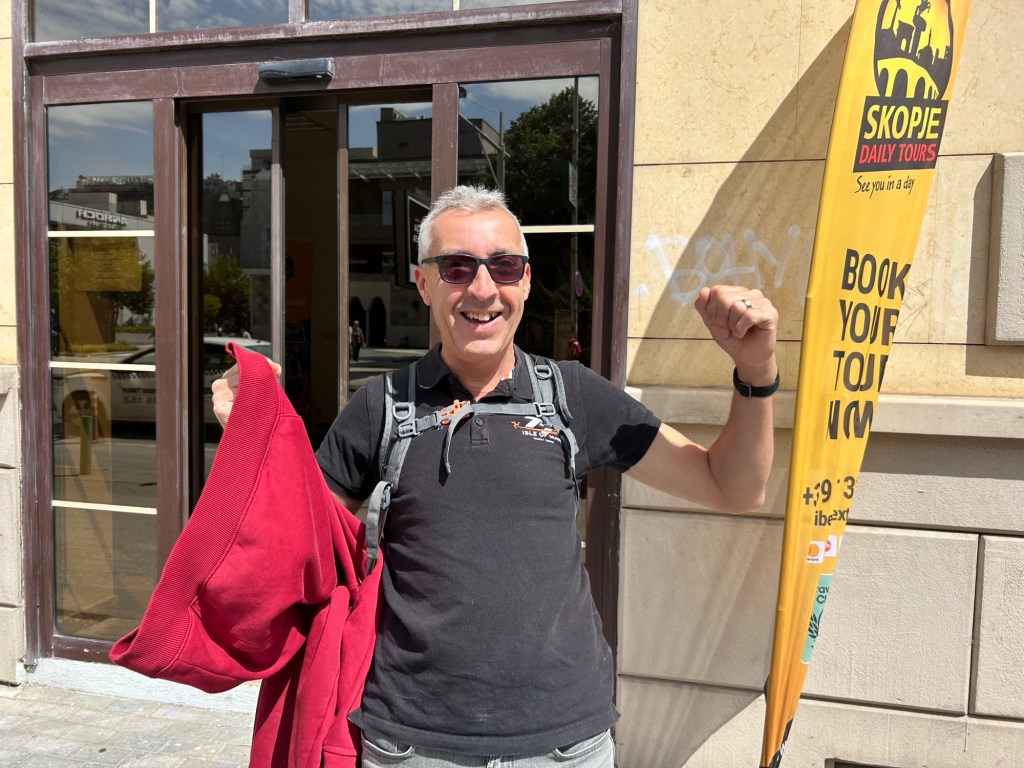
Not sure how we missed that! Inside, Dad sees his missing item of clothing on a table and lifts it, as the member of staff behind the counter looks on in bewilderment. One short explanation later, and we’re free to leave. That’s a success, given the weather forecast shows a heavy band of rain moving in later in the afternoon. We’ve been very fortunate with the weather on this trip, and just missed a couple of big storms in Albania. Aside from skiff of rain transiting from Ohrid to Skopje, it’s more or less been dry the whole time.
Just across the road from the headquarters of Skopje City Tours is the City Museum, located in the ruins of the former Railway Station. As I’ve mentioned in previous days, Skopje was devastated by a huge earthquake in 1963. Some 80% of the buildings in the city were destroyed, and around 1,100 people tragically killed, and 200,000 people left homeless. The earthquake measured 6.1 on the Richter scale, and the epicentre was directly underneath the main square.

Prior to the earthquake, this building was the main train station in Skopje. It was once a stop on the Orient Express line – the opulent train running from Paris to Istanbul.
Nowadays, there’s a new railway station a little out of town.
Two thirds of the buildings collapsed when the tremors hit, but the remaining portion remained, and remains to this day. It was left as a monument to the tragic events of 1963, rough edges and all.

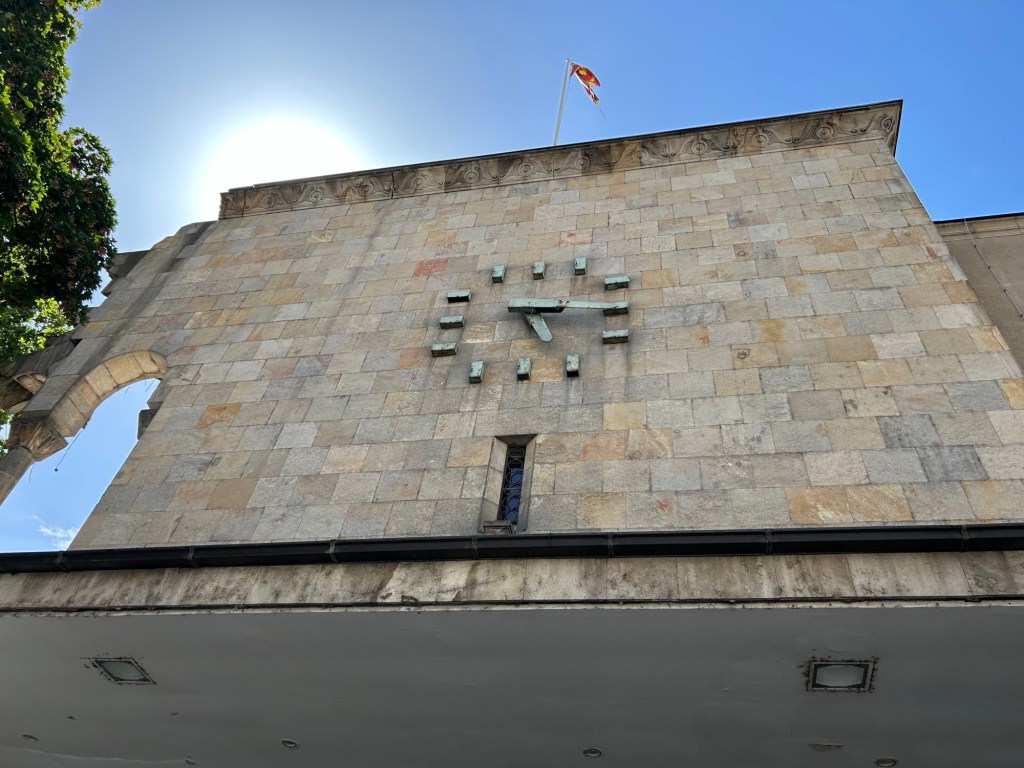
Rather poignantly, on the front facade of the former railway station is a clock, bearing the time that the earthquake struck – 5:17 am on the 26th July. At that very moment the clock stopped – no doubt, time standing still for those caught up in the disaster. It was decided that the clock should not be repaired, again another permanent reminder.
The museum moved in, five years after the earthquake, and that’s the subject of focus for most of the exhibition today. There are only two rooms, and it only takes us about five minutes to get round everything.

On our way out, a guy sat down in the foyer shouts over. It’s the usual where are you from – as always the answer is Ireland (in truth it’s more complicated than that, but the Irish do seem to be better received internationally, so that’s why we go for it). The man is a tour guide called Mihaly who works part time in the museum. He starts to tell us a bit more about the earthquake, and takes us down to a room that used to be part of the platform. Here there are deep cracks etched into the thick marble blocks – these, of course, another result of the earthquake.

Mihaly explains that railway travel has fallen by the wayside in North Macedonia a tad. Most were closed down gradually through the second half of the 20th century for cost cutting. Talk of restoring these has picked up recently, and there’s good cause to believe this will ultimately go ahead: Serbia is renovating their lines, and when completed, this will slash transit time by rail from 12 hours, to 3 hours; similar story with Bulgaria, and line restoration is around 80% complete. On the other hand, the relationship with Greece isn’t so rosy – Greece has shut their international borders (due to issues with migrants amongst others) – I’m sure the difficult political relationship between both nations isn’t helping the matter. Mihaly seems to think this is better than it has been, and the bigger issue is with Bulgaria. I’m not sure exactly what their dispute entails, but with a bit of Googling – it seems to be similar to the Greek dispute (cultural identity, recognition of language, and whether famous heroes were truly Macedonian or Bulgarian).
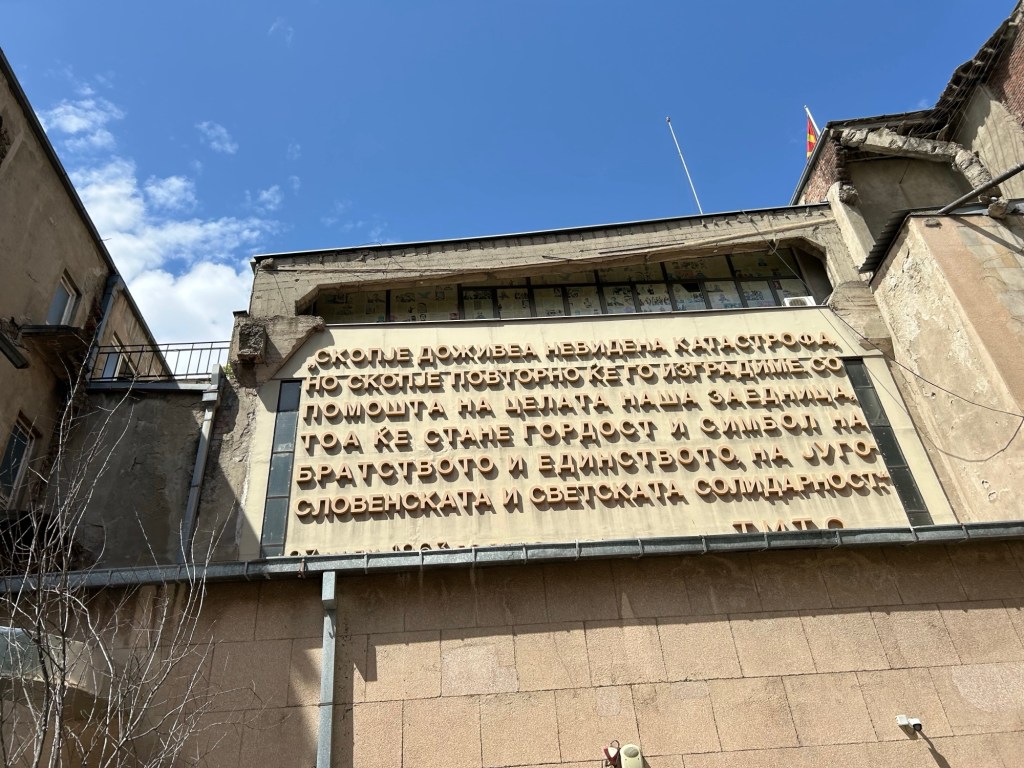
After the earthquake, the Yugoslavian president Josip Tito visited Skopje and vowed to throw the support of the other 5 republics – Serbia, Bosnia & Herzegovina, Croatia, Montenegro and Slovenia. The US and Soviet military also brought aid, and remarkably didn’t fight each other in doing so. A quote from Tito has been put up on the damaged side of the railway station: “Skopje was struck by an unseen catastrophe but we will rebuild it again. With the help of our entire community, it will become our pride and a symbol of brotherhood and unity, of Yugoslav and of world solidarity”.
Not far away, is the house of Skopje’s most famous daughter – Anjezë Gonxhe Bojaxhiu, AKA Mother Teresa. I say the house, that one was another victim of the earthquake, and now a metal plaque marks the location. This house was a ‘memorial house’ built at the location of the former Sacred Heart of Jesus church where she was baptised as an infant.

Outside the house, which is unorthodox in more ways than one, are 4 fountains – one for each of her 4 returns to the city she left as a teen (1970, 1978, 1980 and 1986).

At the age of 12, Anjezë realised her calling to serve God, and 6 years later, moved to Ireland to train with the Sisters of Loreto for six weeks, before moving on to Calcutta in India. It was here where she lived, and served for the remainder of her life.
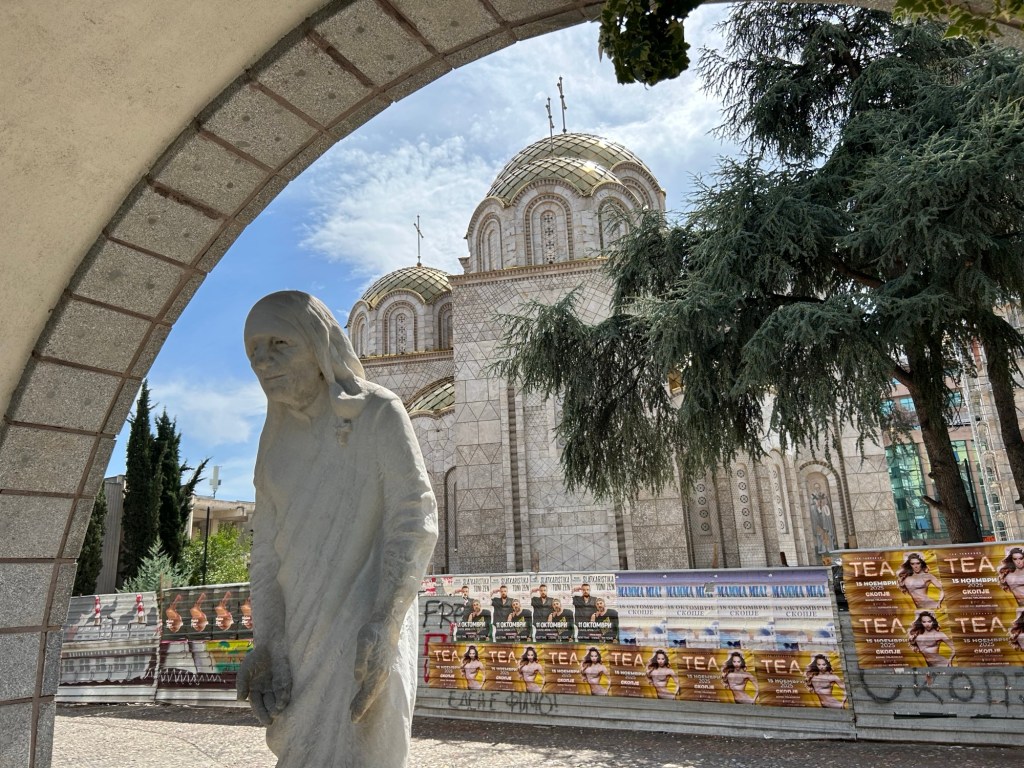
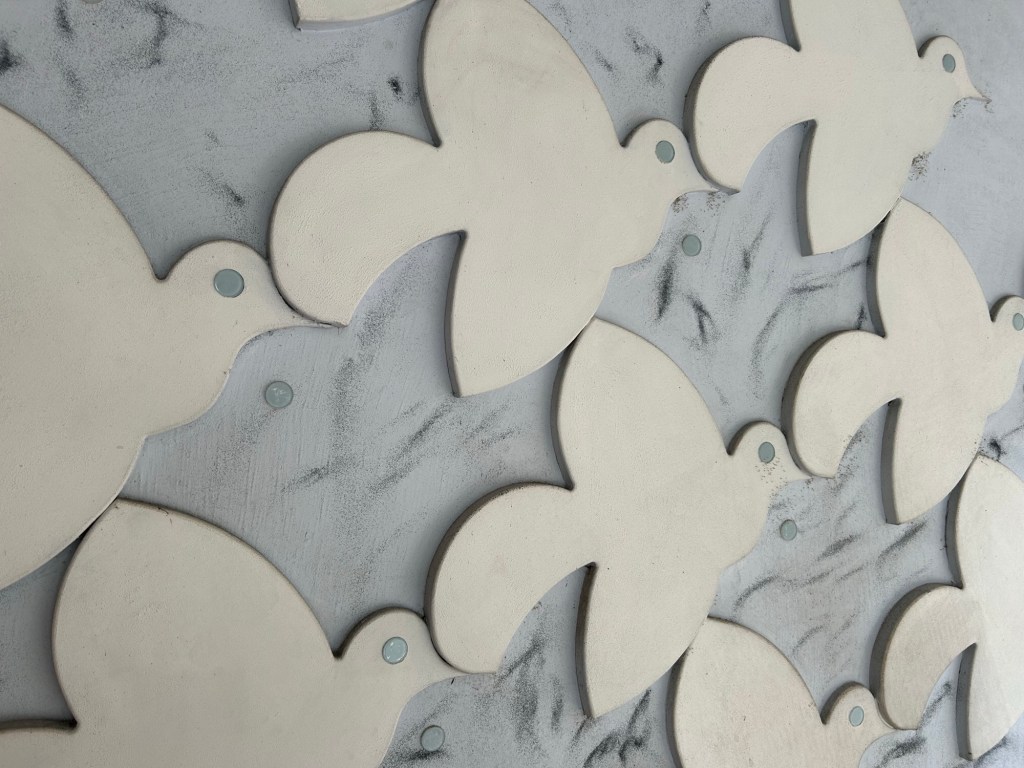
The memorial house has an interwoven fish and doves pattern adorning its front wall: this representing the two main things she stood for – peace and Christianity.
Anjezë chose Teresa as her religious name, and was awarded the Nobel peace prize in 1979. At this time, she was almost entirely unknown here in Skopje. That had changed by the time of her death in 1997 in Calcutta.
The impact of her legacy is astounding.
Inside, a tight spiral staircase leads up to a small room, with a modest display containing some pictures and letters written by Mother Teresa during her ministry.
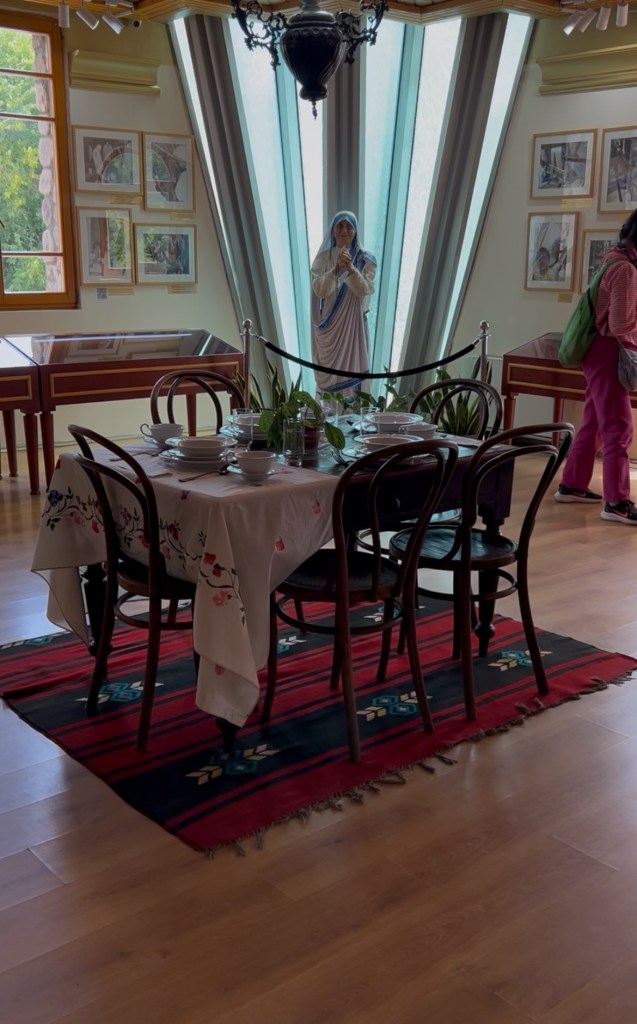
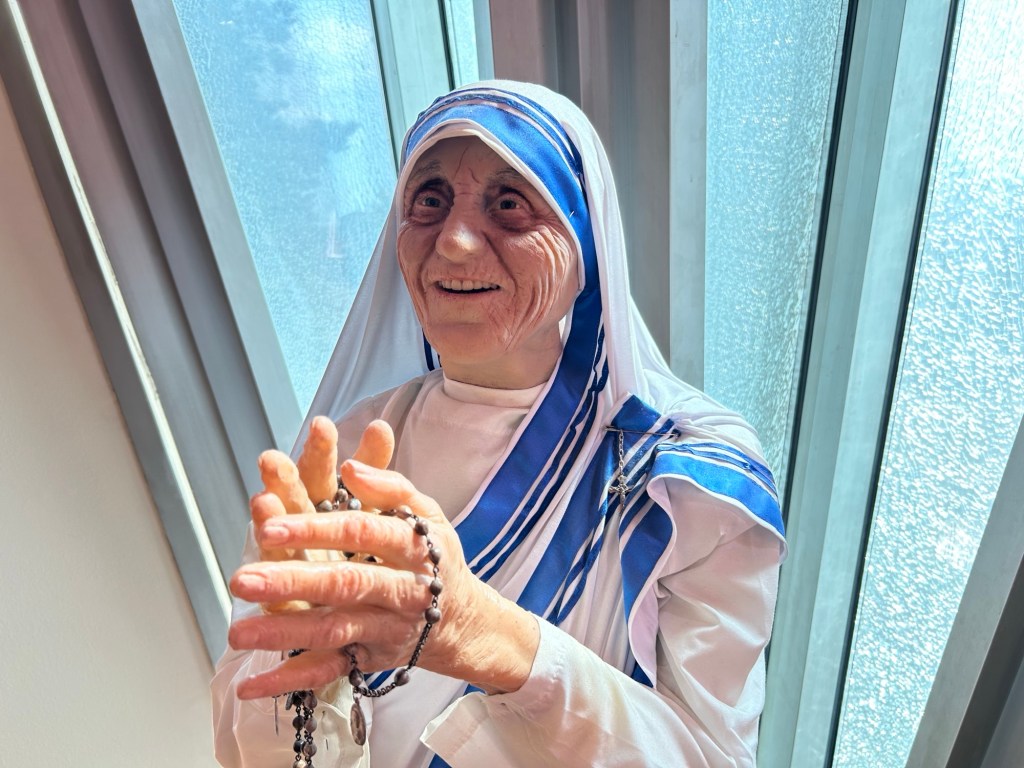
There’s also a wax model of the famous missionary (which has an unflattering resemblance to ET), and another room with a tall ceiling and glass walls which acts as a chapel.
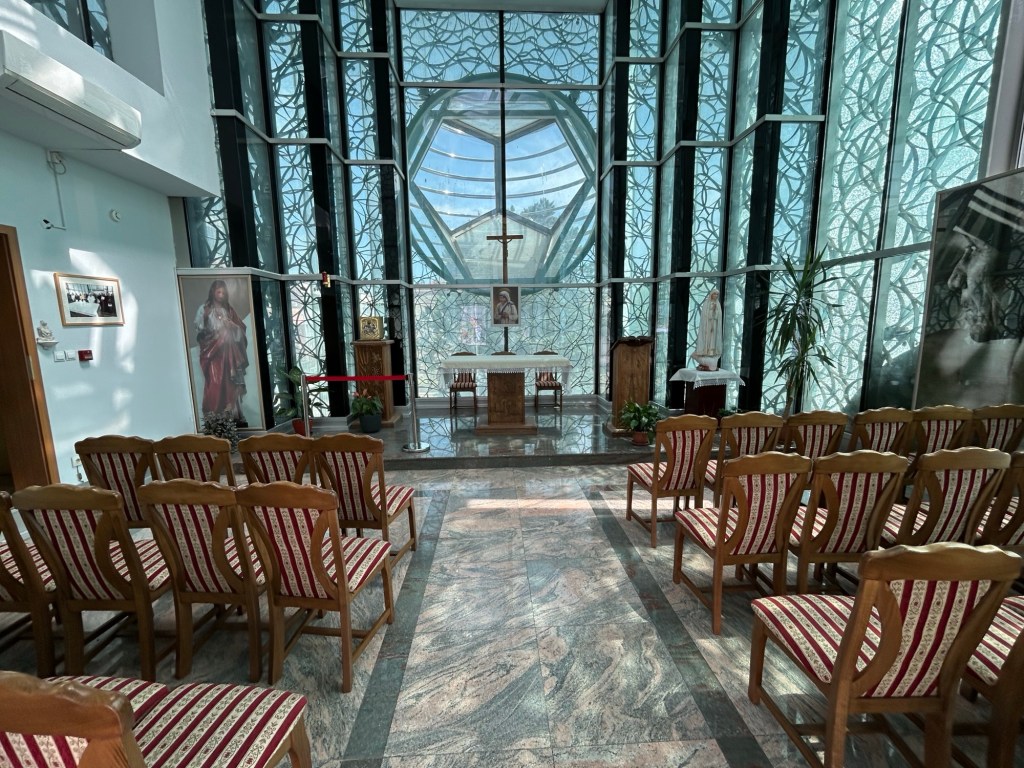
It the ground floor gift shop, some quotes have been printed on postcards, and this one particularly resonates:
“The greatest disease in the West today is not TB or leprosy; it is being unwanted, unloved, and uncared for. We can cure physical diseases with medicine, but the only cure for loneliness, despair, and hopelessness is love. There are many in the world who are dying for a piece of bread but there are many more dying for a little love. The poverty in the West is a different kind of poverty — it is not only a poverty of loneliness but also of spirituality. There’s a hunger for love, as there is a hunger for God.”
It’s so true, for anyone not feeling wanted or loved, just remember that God loves you more than you could ever know. He hand picked you to experience life, and loved you so much that he sent His son Jesus to die on a cross, to bear all of your sins that you may live in eternity with Him if you accept Him into your life.
After this we dander towards Macedonia Square, with a particular desire to sample Burek for lunch. A bakery at the side of Macedonia street fits the bill, and we sit down to tuck into the local cuisine.
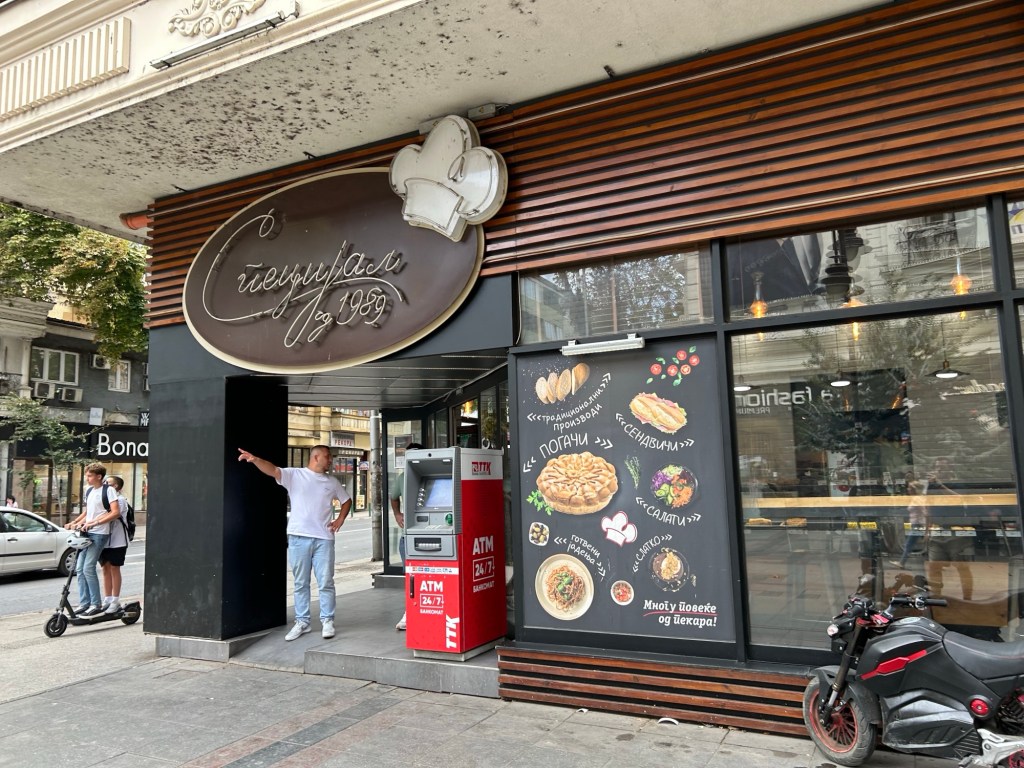
It’s good stuff – basically like pie, and comes in three main varieties: cheese, spinach and meat. I go for the latter option! It tastes just like a mince beef pie from back home. They say this is a great hangover cure – it’s no wonder, what with all of the grease!

With that, we make our way back to the car. Our apartment is located in the Aerodrom district of Skopje – the largest of the city’s 10 municipalities. Aerodrom means airport, but you’ll not find the airport anywhere near here these days, though there did used to be one here.
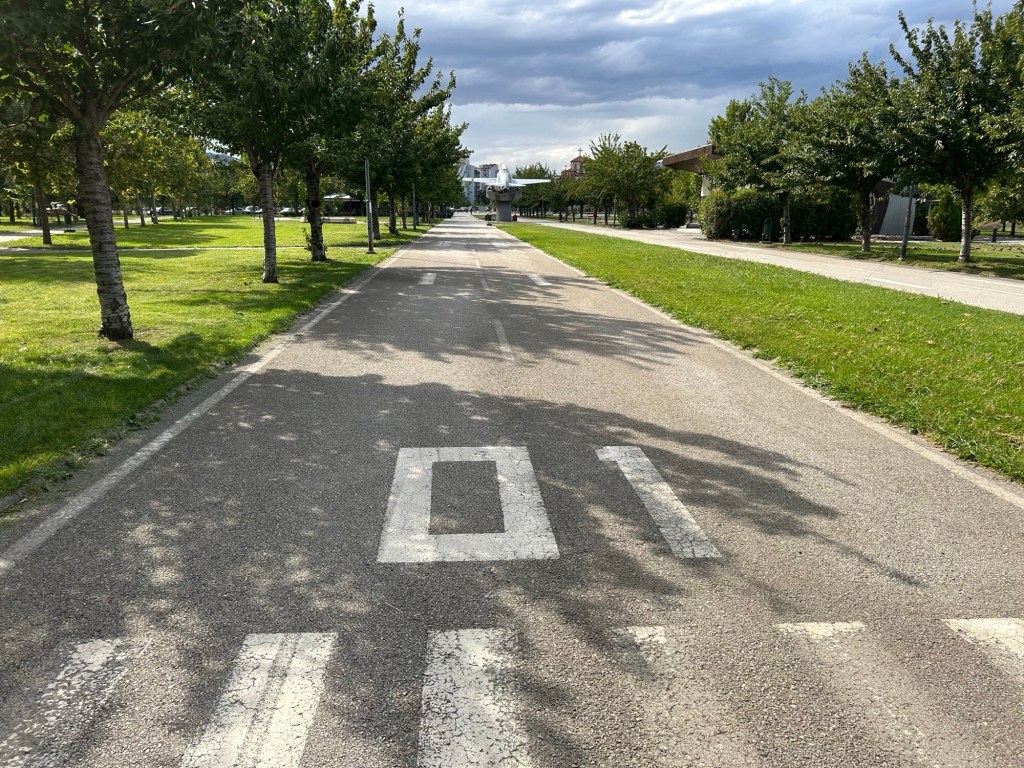
With this in mind, Aerodrom park has been rather tastefully designed to resemble a runway, with a plane of undeterminable manufacture taking off (on a concrete plinth in the middle). It’s a really lovely touch, but I can’t help but notice that the runway is too short for such a plane (whatever it is!)
As we get back to the apartment, the dark grey storm clouds have rolled in, and the sound of thunder reverberates in the air. I must say, it’s a little unnerving being on floor 33 of the tallest building in Skopje with lightning around.

Eventually the thunder and lightning passes, but it looks like the rain is with us for the evening.
We like to do something memorable on our last night, and having covered pretty much everything on our list, we’ve had to scour the internet pretty hard. It came up with a traditional Balkan night in one of the nearby restaurants, featuring traditional Balkan music, dance, costumes in food. Everyone seems on board, and I make a booking online. Sadly I get a WhatsApp message half an hour to say they need to cancel as the restaurant is undergoing repairs. I’m still wishing for the refund by the way!
So instead, we find the most traditional looking restaurant online and make a booking. No such dramas with this place.
It’s called the National Restaurant Makedonska Kukja, and we arrive with the sky mostly dark and light rain still falling. As the car pulls up outside, there are two men at a table giving us an intense stare, as if to say, who are you and what are you doing here. Ah, the people here are so welcoming!

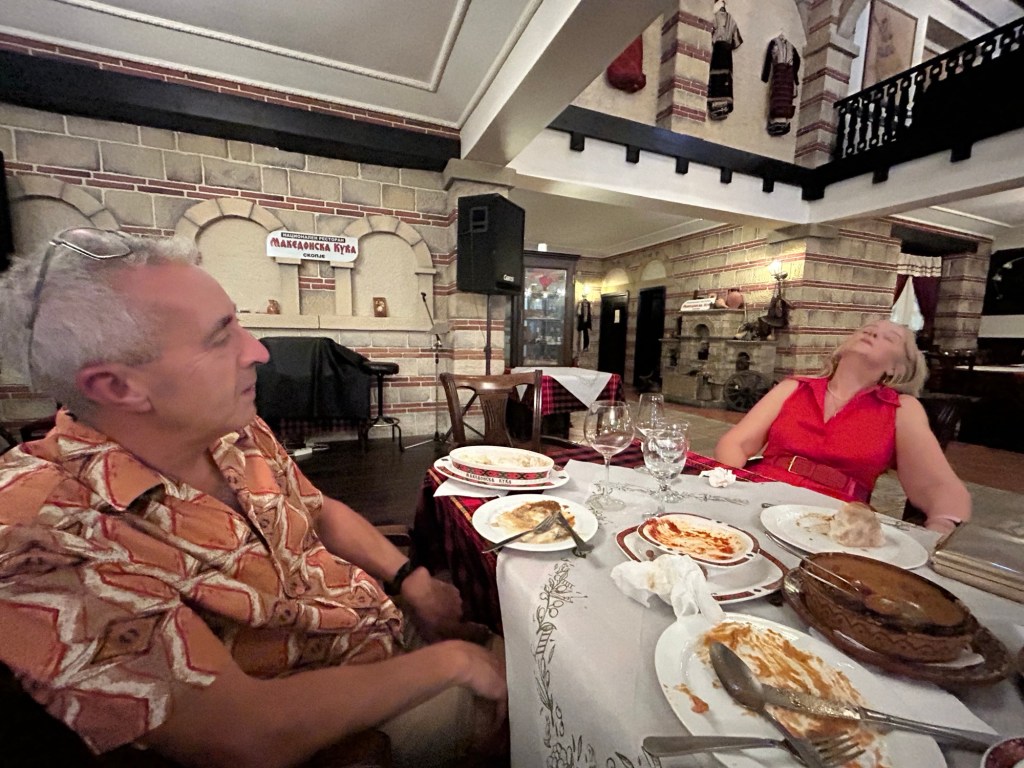
We walk in, to be greeted by a waiter in traditional costume, and nobody else in the restaurant. It’s a ghost town and we’ve got the whole place to ourselves. As we take our seats, the waiter disappears behind the bar to press play on the traditional music on the sound system.
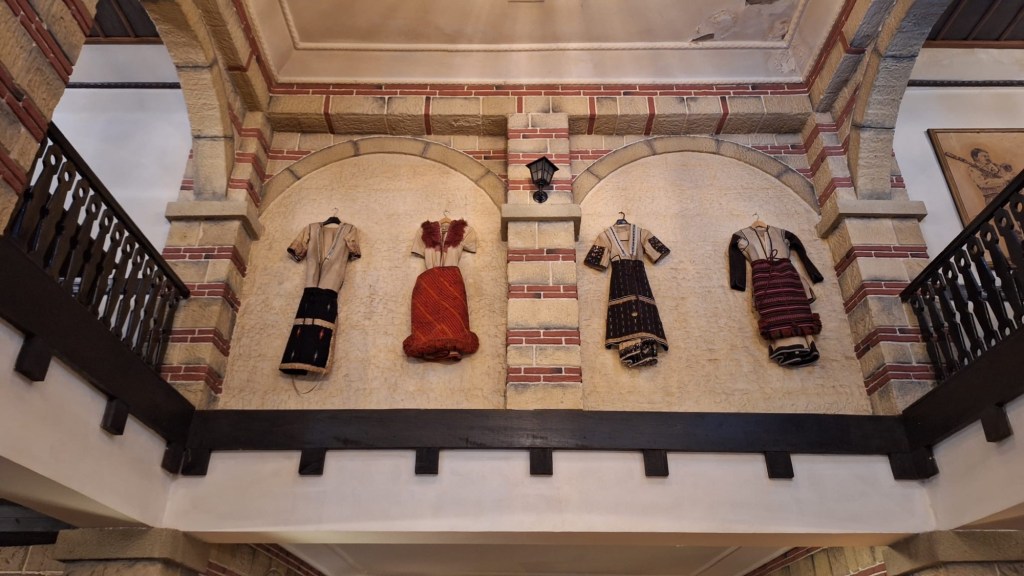
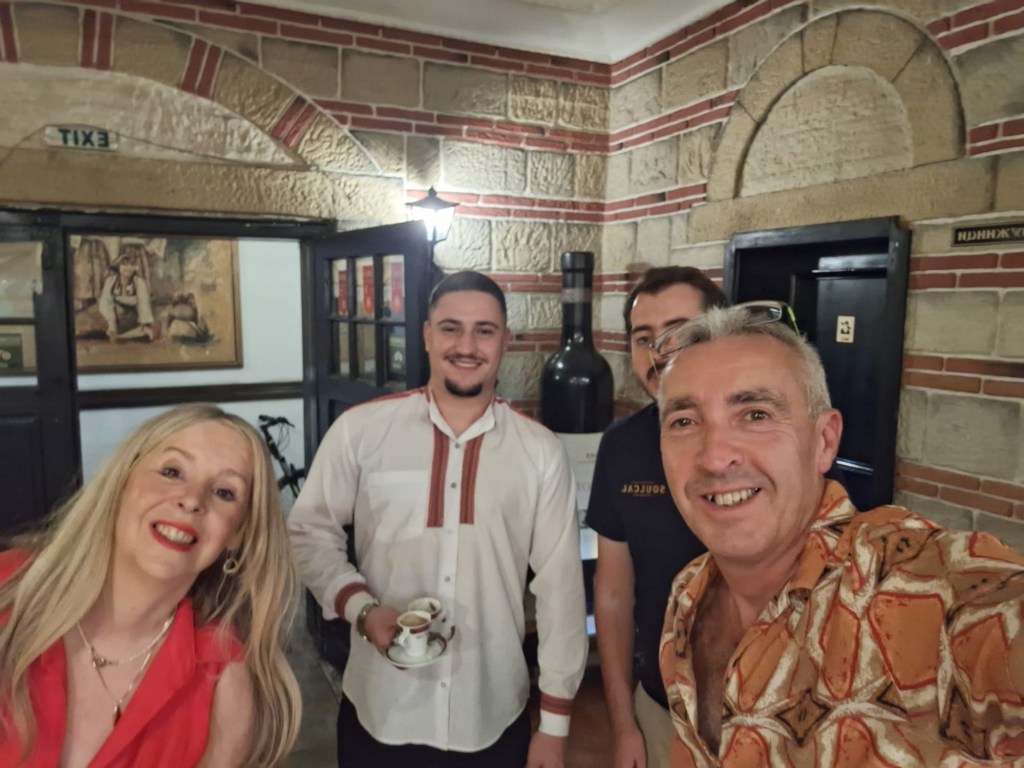
The food is incredible – there might not be much of an atmosphere in the restaurant, but the chef is absolutely cooking in the kitchen! I order some kind of beef stew with baked beans and a Greek salad. It’s our best meal of the trip. A fitting end to our Balkan experience.
Over the last two weeks, we seen our fair share of cities, hills, lakes and Fanta, but just like all good things, our time here must sadly come to an end.
I would like to take the opportunity to thank each of you for reading along. I hope you’ve learned something interesting and this hasn’t been a horrible waste of time. If you have any questions about the Balkans (or my travels elsewhere) please feel free to reach out to me on social media, or drop a message in the comments below!
As they say here in North Macedonia – goodbye!


 See Travel Blog
Leave a comment